Pre-Grade Report
Patrick Mahomes II
Front bottom surface has a hair or something that got underneath the clear coat. Back has some scratching.
Estimate
9Estimate
Issue types
Corners9
Surface8.75
Edges9.25
Centering53/47
Thinking of getting your cards graded? Follow this guide for a clean, prepped card that's ready to submit.
These are the six steps we use to evaluate and prep cards before we submit them to PSA, BGS, SGC, or CGC, plus the line between prep and alteration that you should never cross.
Rather have us do it? We clean, prep and pre-grade cards for $10 each, and nothing is submitted without your approval.
See pricingGrading is unforgiving. A fingerprint, loose debris, poor centering, a soft corner, or an unnoticed surface defect can be the difference between the grade you're expecting and the grade you actually receive.
Just as important, cards are often damaged before they ever reach the grader: grit on a desk, a card dragged across a surface instead of lifted, a corner caught while sleeving, or a stack packed too loosely for shipping.
Card prep has three jobs:
Know exactly what you're submitting, remove only what can safely be removed, and protect the card from the moment you inspect it until the moment the grader opens the package.
This gives your cards the best possible chance at their highest grade.
Before the card comes out of its sleeve, set up your workspace.
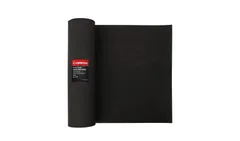
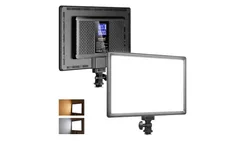
Use a clean, soft, non-abrasive mat and a bright adjustable light positioned at a low angle to the card. Overhead lighting is fine for general inspection, but angled or "raking" light is what reveals fine scratches, print lines, dimples, fingerprints, and other surface issues.
Before you clean, sleeve, or submit a card, figure out what you have.
Inspect the corners, edges, centering, and surface on both the front and back. Use magnification to find the defects that are easy to miss with the naked eye.
Focus on these four areas:
Look for whitening, softness, fraying, bends, or compression. On high-grade modern cards, even a small corner defect can matter.
Check for chipping, rough cuts, whitening, dents, and factory edge issues. Dark-bordered cards make edge wear especially easy to see.
Compare the left/right and top/bottom borders. Don't assume an otherwise flawless card is a Gem Mint candidate if the centering isn't there.
PSA's current published standard for a PSA 10 allows approximately 55/45 centering on the front (55% of the border on one side, 45% on the other). Grading is still subjective, and eye appeal matters.

Tilt the card slowly under angled light. Look for:
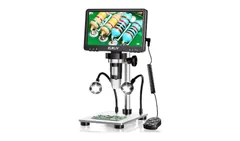 Digital MicroscopeView on Amazon
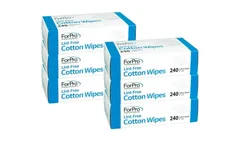
The safest kind of card prep removes loose, superficial contamination without changing the card itself. Think dust, fibers, or a light fingerprint on an appropriate glossy surface.
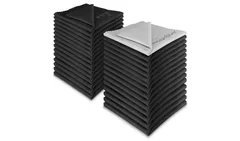
Use a clean, extremely soft microfiber cloth with almost no pressure. If something doesn't come away easily, stop.
On our bench, grime that a dry cloth won't lift on chrome and other glossy modern cards gets a small amount of a mild cleaner we make in house. Older cardboard stock gets a dry wipe only. The cleaner is for surface grime only. It never goes after stains, scratches or anything that's part of the card.
A scratch is not dirt.A print line is not dirt.A stain is not dirt.A damaged surface is not dirt.
Trying to remove those defects can turn an imperfect but gradable card into an altered card.
Avoid abrasive compounds, erasers, household cleaners, alcohol, whitening products, waxes, polishes, or anything designed to remove material from the card's surface.
Be especially conservative with vintage and uncoated paper stock. In many cases, the safest cleaning method is no cleaning at all.
Watch this stepAfter handling or removing loose contamination, put the card back under the same lighting you used during the initial evaluation.
Fingerprints and debris can hide surface defects, so once the surface is clean, scratches, print lines, indentations, or other flaws may be easier to see.
Check all four areas again:
Then make the grading decision. Ask yourself:
If this card comes back one grade lower than I'm hoping for, does submitting it still make sense?
If the answer is no, that's usually the card to keep raw.
And if you find yourself thinking, "I can probably fix that," stop. That's where prep ends and alteration begins.
Once you're finished inspecting the card, protect it immediately.
For standard cards, place the card into a clean penny sleeve and then into the appropriate semi-rigid holder. Don't force a card into a tight sleeve or holder. That's how corners get damaged during prep.
For PSA submissions, semi-rigid holders such as Card Saver I are the standard format today. Whichever grader you use, check its current requirements before you ship.
Watch this step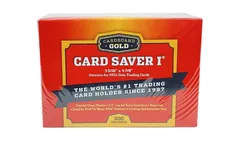 Card Saver I Semi-Rigid HoldersView on Amazon
You've done all the work. Don't lose a corner in shipping.
Keep the submitted cards together in order and protect the stack between rigid cardboard or purpose-built submission protectors. Secure the stack firmly enough that the cards can't shift, but not so tightly that the holders bend or compress.
Then place the protected stack inside a sturdy shipping box with padding around it so nothing moves during transit.
Before you close the box:
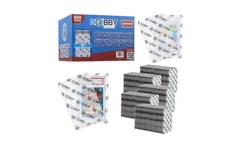 Hobby Armor 4×6 ProtectorsView on Amazon
Good prep helps a grader see the card you already own.
Alteration attempts to change the card.
A card with evidence of trimming, recoloring, restoration, pressing, scratch removal, enhanced gloss, or certain types of cleaning may be rejected, designated Altered, or encapsulated without a numerical grade.
We never do these five things to a card headed for grading, and you shouldn't either.
Don't cut, shave, sand, or otherwise modify an edge to improve centering or remove damage.
Factory dimensions and edge characteristics matter, and graders specifically look for evidence of trimming.
Don't use markers, paint, ink, or other materials to hide edge whitening, chipped borders, scratches, or missing color.
It may look better to the naked eye. It doesn't make the card original again.
Don't buff, polish, or use abrasive compounds or treatments meant to restore shine, and don't apply wax or anything else to enhance gloss. Any of these can physically alter the surface.
If the scratch is there, evaluate the card with the scratch.
Don't try to lift a stain with solvents, alcohol, whitening products or household sprays. They can permanently change paper stock, coatings, inks, or foil.
A stain is part of the card's condition. Evaluate the card with the stain.
Don't use an iron, hair dryer, heated press, clamp, or other method to remove wrinkles, bends, creases, or warping.
A card's physical condition is part of its grade. Trying to mechanically change that condition can create a bigger problem than the original flaw.
Clean isn't the same thing as altered.
Our goal is to identify the card that's actually capable of earning a 10, eliminate preventable handling mistakes, and make sure it reaches the grader in the same condition we evaluated it. Good grading prep never tries to turn an 8 into a 10.
The Pre-Grade Report marks the flaws on the front and back scans, with a reading for each of the four areas and an estimated grade. Then you decide what gets graded.
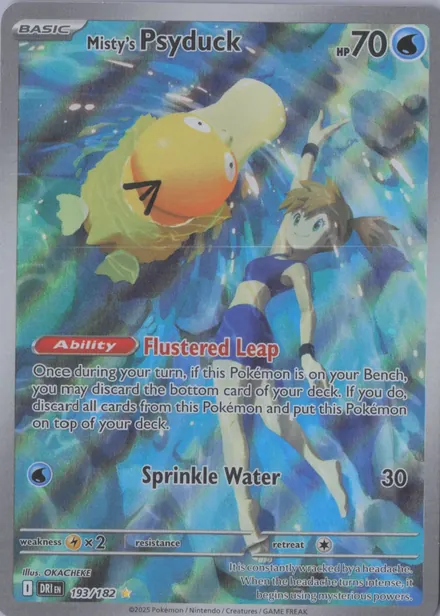
Misty’s Psyduck
Very nice copy with just a small white chip on back bottom corner. Don't think it will gem.
Issue types
Grading tips and market notes from the bench, by email.
Send your cards to us. We clean, prep and pre-grade each one for $10.